LOG With One Argument Is Base 10 on PostgreSQL and the Natural Logarithm on MySQL
A score or a scale built on LOG() shifts when the code moves to another engine, because LOG(100) doesn’t mean the same logarithm everywhere.
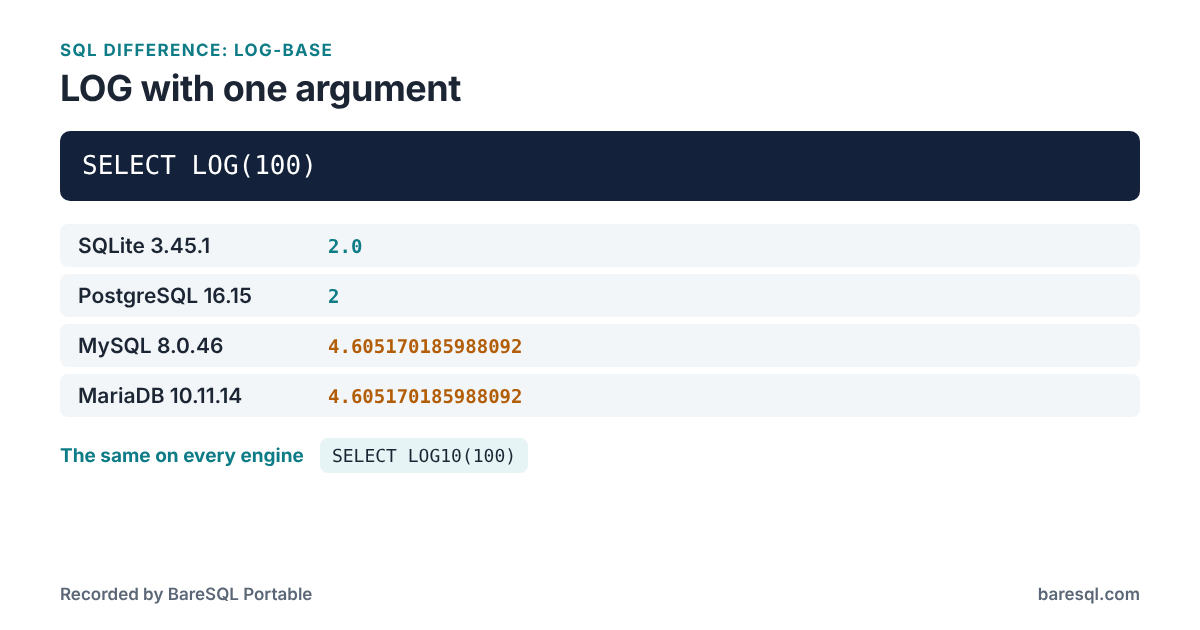
LOG(100) is 2 on SQLite and PostgreSQL and 4.605 on MySQL and MariaDB. With two arguments, LOG(b, x) is the logarithm of x to base b on all four. SQLite has LOG, LN, LOG10 and POWER only when it is built with its math functions: the sqlite3 program is by default since version 3.35, and some systems ship it without them.
What Each Engine Answered
The example
SELECT LOG(100);
gave these answers:
| Engine | Answer |
|---|---|
| SQLite 3.45.1 | 2.0 |
| PostgreSQL 16.15 | 2 |
| MySQL 8.0.46 | 4.605170185988092 |
| MariaDB 10.11.14 | 4.605170185988092 |
The SQLite answers assume a build with math functions.
What to Write Instead
This form answers the same on every engine:
SELECT LOG10(100);
| Engine | Answer |
|---|---|
| SQLite 3.45.1 | 2.0 |
| PostgreSQL 16.15 | 2 |
| MySQL 8.0.46 | 2 |
| MariaDB 10.11.14 | 2 |
Say which one you mean: LN(x) for the natural logarithm, LOG10(x) for base 10.
What BareSQL Portable Reports
Saved as example.sql, the example gets this from baresql lint --all:
$ baresql lint --all example.sql
example.sql:1:8: warning: LOG(x) is the base-10 logarithm on SQLite and PostgreSQL and the natural logarithm on MySQL and MariaDB. [log-base]
    LOG(100)
    Say which one you mean: LN(x) for the natural logarithm, LOG10(x) for base 10.

1 problem: 1 warning.
baresql rules log-base prints the same answers in the terminal, and the BareSQL Portable page lists every difference BareSQL knows.